



Questions in Christian Philosophy
Loving God with Your Mind: Accessible Introductions to Philosophy
Philosophy means "the love of wisdom." As philosophy pursues knowledge and understanding of all facets of life, it asks questions like How do we know? What should we do? What is real? What is art?
But what does it mean for Christians to pursue wisdom when Scripture affirms that the crucified and risen Christ is "the wisdom of God" (1 Cor. 1:24)?
The Questions in Christian Philosophy series seeks to help readers in their pursuit of wisdom from a Christian perspective by offering introductory textbooks on the various branches of philosophy.
Designed for students with little or no background in the discipline, this series is written by experts in the field and lays a solid foundation for further philosophical reflection in pursuit of divine wisdom.
What you'll find in the Questions in Christian Philosophy series:
- Expert yet accessible introductions to different areas of philosophy such as logic, metaphysics, and epistemology
- A firm framework from which to continue studying philosophy as a Christian
- Philosophical inquiry that is centered around the love of God
- An approach to philosophy that is useful for the real world
Praise for the Series
"For the longest time, we have needed a sharp, accessible, well-written and competent series of books on a range of philosophical topics of importance for forming a thoughtful Christian worldview. Well, now one is being planned, and InterVarsity Press is just the right publisher to pull this off. Designed as undergraduate or graduate texts, as well as providing resources for thoughtful readers everywhere, this series of excellent books, written by well-trained and biblically faithful authors, could not be coming at a better time. I urge Christian schools to require them as texts and churches to make them must-reading. With gratitude and enthusiasm, I highly recommend this wonderful series."
—J. P. Moreland, distinguished professor of philosophy, Talbot School of Theology, Biola University
"The Church has a vital stake in raising up Christians trained in philosophy, the most fundamental domain of thought, who will help to create a place at our universities and other cultural spaces for Christian ideas. It is my hope that IVP Academic's Questions in Christian Philosophy series will make an important contribution to the training of the next generation of Christian scholars, leaders, and laypeople."
—William Lane Craig, professor of philosophy at Houston Baptist University and research professor of philosophy at Talbot School of Theology, Biola University
"In my early exposure to philosophy, I greatly benefited from reading every book in IVP's Contours of Christian Philosophy series. So I am pleased to recommend this exciting new IVP series—Questions in Christian Philosophy—for the next generation of Christians who are philosophically-minded or just philosophically curious. These volumes bring a fresh, informative, up-to-date discussion of philosophical topics enriched and illuminated by a Christian perspective."
—Paul Copan, Pledger Family Chair of Philosophy and Ethics, Palm Beach Atlantic University, and author of A Little Book for New Philosophers
From the Series Editors
"Contrary to what most people might think, human beings are inherently philosophical. We draw inferences about everyday life, theorize about major events and developments in the world, and do all of this while blindly utilizing philosophical categories and tools. Doing philosophy is inevitable. Doing philosophy well, however, is more difficult to find. And yet, given the importance of things we are interested in, doing philosophy well is critical. A contemporary introductory series to the major questions in philosophy is incredibly valuable, especially for those seeking to honor God with their mind. This series is designed to meet that need. Our authors write with their students in mind, carefully defining terms and illustrating key concepts in ways that make philosophy tangible and useful for the those who need it most."
—James K. Dew, Jr., president and professor of Christian philosophy, New Orleans Baptist Theological Seminary
"C.S. Lewis once remarked, 'Good philosophy must exist, if for no other reason, because bad philosophy must be answered.' About that he is surely right. However, it turns out that there are other reasons for good philosophy. One reason is that good philosophy enables one to entertain questions that are central to one’s worldview—questions related to the nature of truth, the nature of goodness, and the nature of beauty. And that is the aim of this series. In undertaking Questions in Christian Philosophy, the authors are not merely engaging in these philosophical pursuits and then adding Jesus to the mix when they're done. Instead, they are pursuing these questions out of a love and devotion to Christ that not only guides the questions asked, but also motivates the attempt to answer them."
— W. Paul Franks, associate professor of philosophy, Tyndale University, Toronto
Subtotal: $0.00
-
 Paperback
What Is Beauty?
An Introduction to Art and Aesthetics
Questions in Christian Philosophy
by Dennis P Bray
Series edited by James K. Dew Jr. and W. Paul FranksDoes beauty really exist? What is the nature and value of art? What makes someone an artist? What is the artist's place in the church?
Dennis Bray explores these questions and more in What Is Beauty?, an introductory textbook on art and aesthetics from a Christian perspective. This volume of the Questions in Christian Philosophy series provides one of the ...
-
 Audiobook
How Do We Know?
An Introduction to Epistemology
Questions in Christian Philosophy
by James K. Dew Jr. and Mark W Foreman
Read by Brandon BellWhat does it mean to know something? Epistemology, the study of knowledge, can often seem like a daunting subject. And yet few topics are more basic to human life. In this primer on epistemology, now in a second edition, James Dew and Mark Foremanprovide an accessible entry into one of the most important disciplines within contemporary philosophy.
-
 Paperback
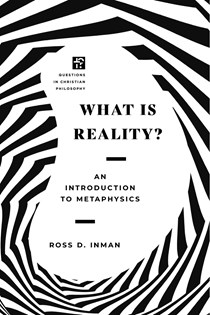
What Is Reality?
An Introduction to Metaphysics
Questions in Christian Philosophy
by Ross David Inman
Series edited by James K. Dew Jr. and W. Paul FranksIn this introduction to metaphysics, Ross Inman introduces us to the tradition of metaphysics in Western philosophy, what it means to do metaphysics as a Christian, and considers timeless and universal inquiries into central topics of metaphysics:identity, necessity and possibility, properties, universals, substances, and parts and wholes.
-
 Paperback
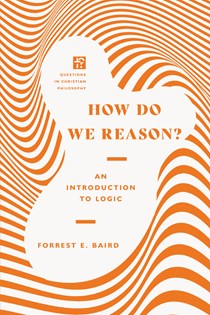
How Do We Reason?
An Introduction to Logic
Questions in Christian Philosophy
by Forrest E. Baird
Series edited by James K. Dew Jr. and W. Paul FranksHow exactly does logic work? What makes some arguments valid and others not? What does a faithful use of logic look like? In this introduction to logic, philosopher Forrest Baird considers the basic building blocks of human reason, including typesof arguments, fallacies, syllogisms, symbols, and proofs, all of which are demonstrated with exercises for students throughout.
-
 Paperback
How Do We Know?
An Introduction to Epistemology
Questions in Christian Philosophy
by James K. Dew Jr. and Mark W Foreman
What does it mean to know something? Epistemology, the study of knowledge, can often seem like a daunting subject. And yet few topics are more basic to human life. In this primer on epistemology, now in a second edition, James Dew and Mark Foremanprovide an accessible entry into one of the most important disciplines within contemporary philosophy.


