


New Explorations in Theology
Featuring new monographs with cutting-edge research, New Explorations in Theology provides a platform for constructive, creative work in the areas of systematic, historical, philosophical, biblical, and practical theology.
Theology is flourishing in dynamic and unexpected ways in the twenty-first century. Scholars increasingly recognize the global character of the church, freely crossing old academic boundaries and challenging previously entrenched interpretations. Scholars today are engaged in hopeful and creative work in the areas of systematic, historical, philosophical, biblical, and practical theology.
New Explorations in Theology provides a platform for constructive, cutting-edge work in these fields. IVP Academic is committed to publishing the best new monographs that advance key theological conversations and make this work available to scholars, graduate students, and pastor-theologians.
This series features books that:
- Investigate new areas of theological research
- Stimulate fruitful theological dialogue
- Attend to diverse contexts and audiences in a pluralistic world
- Offer fresh insights for the future of Christian theology
Praise for the Series
"New Explorations in Theology provides a platform for the very best of the discipline—exciting scholars addressing classic theological topics with questions of contemporary relevance in new, cutting-edge ways. The series allows contributors to explore themes and figures across systematic, philosophical, historical and constructive boundaries, and to develop new approaches to the discipline."
—Tom Greggs, Marischal Professor of Divinity, University of Aberdeen
"The New Explorations in Theology series provides a much-needed space for both emerging and senior scholars to engage in the many rich conversations taking place within the broad range of theological discourse today. The result is academic work at its best—lively, challenging, provocative, stimulating. Both the individual volumes and the series as a whole are making significant contributions to shaping the future of the discipline of theology."
—Kristen Johnson, associate professor of theology and Christian formation, Western Theological Seminary
"The New Explorations in Theology series fills an important lacuna in contemporary theological literature, by carving out space for systematic, historical, philosophical, and other constructive monographs on important theological issues, doctrines, and figures for a reasonable cost. These are high-level explorations in theology that deserve close attention by scholars and graduate students of theology."
—Kyle Strobel, associate professor of spiritual theology, Biola University
Subtotal: $0.00
-
 Paperback
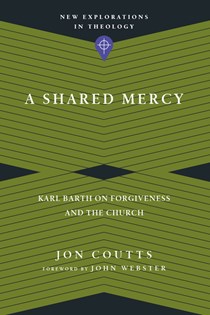
A Shared Mercy
Karl Barth on Forgiveness and the Church
New Explorations in Theology
by Jon Coutts
Foreword by John WebsterCombining systematic and pastoral theology, Jon Coutts explores what it means to forgive and reconcile in the context of the Christ-confessing community. Both a constructive practical theology and a critical commentary on Barth's theology in Church Dogmatics, this work explains the place and meaning of interpersonal forgiveness in Christ's ongoing ministry of reconciliation.
-
 Paperback
Chrysostom's Devil
Demons, the Will, and Virtue in Patristic Soteriology
New Explorations in Theology
by Samantha L Miller
References to demons and the devil permeate the rhetoric of John Chrysostom, the "golden-tongued" early church preacher and theologian. Samantha Miller examines Chrysostom's theology and world, helping us understand the role of demons in his soteriology and exploring what it means to be human and to follow Christ in a world of temptation.
-
 Paperback
Jonathan Edwards and Deification
Reconciling Theosis and the Reformed Tradition
New Explorations in Theology
by James Salladin
The language of deification, or participation in the divine nature as a way to understand salvation, often sounds strange to Western Christians. But perhaps Western theologies have more in common with theosis that we thought. James Salladin considers the role of deification in the theology of Jonathan Edwards, exploring how Edwards's soteriology compares with the broader Reformed tradition.
-
 Paperback
Karl Barth's Infralapsarian Theology
Origins and Development, 1920-1953
New Explorations in Theology
by Shao Kai Tseng
Foreword by George HunsingerScholars of Karl Barth's theology have been unanimous in labeling him a supralapsarian, largely because Barth identifies himself as such. In this groundbreaking and thoroughly researched work, Shao Kai Tseng argues that Barth was actually an infralapsarian, bringing Barth into conversation with recent studies in Puritan theology.
-
 Paperback
Kierkegaard and the Changelessness of God
A Modern Defense of Classical Immutability
New Explorations in Theology
by Craig Alan Hefner
Foreword by Daniel J. TreierLiving what he perceived to be a culturally lukewarm Christianity, Søren Kierkegaard was often critical of his contemporary church. This volume explores his reading of Scripture and theology to argue not only that he was a modern defender of the doctrine of divine immutability, but that his theology can be a surprising resource today.
-
 Paperback
Martin Luther and the Rule of Faith
Reading God's Word for God's People
New Explorations in Theology
by Todd R. Hains
Foreword by Robert KolbMartin Luther is known for challenging the Roman Catholic church; yet reading God's Word was what Luther considered his primary task. Though he is often portrayed as reading the Bible with a bare approach, Todd R. Hains considers how Luther's interpretation of the text was actually guided by the church's established practice of hermeneutics.
-
 Paperback
Reading Scripture as the Church
Dietrich Bonhoeffer's Hermeneutic of Discipleship
New Explorations in Theology
by Derek W. Taylor
The Bible is meant to be read in the church, by the church, as the church. Following the example of Dietrich Bonhoeffer, Derek Taylor argues that we should regard the reading of Scripture as an inherently communal exercise of discipleship. In conversation with other theologians, Taylor shares how this approach to Scripture can engender a faithful hermeneutical community.
-
 Paperback
T. F. Torrance as Missional Theologian
The Ascended Christ and the Ministry of the Church
New Explorations in Theology
by Joseph H. Sherrard
Foreword by Alan TorranceWhat contribution can T. F. Torrance make to the discussion of a "missional" view of the church? Theologian and pastor Joseph Sherrard considers how Torrance's theology can inform the church's understanding of its ministry and mission—in particular, his appeal to the church's participation in the ascended Christ's threefold office as king, prophet, and priest.
-
 Paperback
The Making of Stanley Hauerwas
Bridging Barth and Postliberalism
New Explorations in Theology
by David B Hunsicker
Foreword by Stanley HauerwasStanley Hauerwas is often associated with the postliberal theological movement, yet he also claims to stand within Karl Barth's theological tradition. Which is true? Theologian David Hunsicker offers a reevaluation of Hauerwas's theology, arguingthat he is both a postliberal and a Barthian theologian, helping us understand both the formation and the ongoing significance of one of America's great theologians.
-
 Paperback
The Reality of God and Historical Method
Apocalyptic Theology in Conversation with N. T. Wright
New Explorations in Theology
by Samuel V. Adams
Samuel Adams engages the classic problem of the relation between faith and history from the perspective of apocalyptic theology in critical dialogue with the work of N. T. Wright. He argues that historical and theological scholars must take into consideration, at a methodological level, the reality of God that has invaded history in Jesus Christ.
-
 Paperback
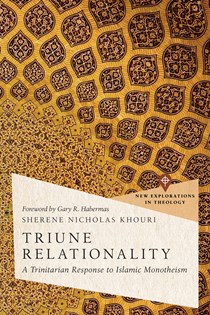
Triune Relationality
A Trinitarian Response to Islamic Monotheism
New Explorations in Theology
by Sherene Nicholas Khouri
Foreword by Gary R. HabermasA key area of disagreement between Christians and Muslims is the nature of God: Is God a Trinity or absolutely one? Applying insights from early Arabic Christian theologians and philosophers to current conversations, Sherene Nicholas Khouri offersboth historical and constructive responses to Islamic objections to the doctrine of the Trinity.


