

Dynamics of Christian Worship
Exploring the Heart of Christian Worship
At the heart of Christian life lies the worship of the triune God. The Dynamics of Christian Worship series seeks to enable Christians to grow in their understanding of the many aspects of Christian worship and their significance for the church.
Books in this series seek to:
- Engage with the fields of biblical, theological, historical, practical, and liturgical scholarship
- Draw from a wide range of worshiping contexts and denominational backgrounds
- Explore a variety of aspects of worship like prayer, reading the Bible, preaching, baptism, the Lord’s Supper, music, visual art, architecture, and more.
Dynamics of Christian Worship Advisory Board:
- Constance Cherry, Indiana Wesleyan University
- Carlos Colón, Baylor University
- James Hart, Robert E. Webber Institute for Worship Studies
- Todd Johnson, First Covenant Church, Seattle
- Trygve Johnson, Hope College
- Glenn Packiam, Rockharbor Church, Costa Mesa
- Melanie Ross, Yale Institute of Sacred Music
- Lester Ruth, Duke Divinity School
- John Witvliet, Calvin Institute of Christian Worship
Through this integrative approach, this series invites readers into a vibrant and faithful expression of worship, deepening both the theology and practice of worship for the life of the church.
Praise for the Series
"The communion of saints in Christ's church is constituted by the exchange of gifts, as we share insights and testimonies with each other about what we are learning as we follow Jesus and seek to worship the triune God. IVP Academic's Dynamics of Christian Worship series promises to be a rich exchange of gifts, drawn from many disciplines and many kinds of worshiping communities, with insights that promise to equip and strengthen us for vital and faithful worship."
—John Witvliet, professor of worship, theology and congregational and ministry studies, Calvin University; director, Calvin Institute of Christian Worship
"In Christian worship, we have the great privilege of telling the world its true story, bringing it to the right worship of the only God who is ultimately true, good, and beautiful. The Christian life finds both its source and summit in worship. The Dynamics of Christian Worship series promises to bring critical and fresh scholarship to the varied aspects and facets of worship that will inspire God’s people as they seek to know, love, and be reconciled to the triune God."
—James Hart, president, Robert E. Webber Institute for Worship Studies
"Designing and leading Christian worship today is both exciting and challenging. It calls for multidimensional leadership. What could be more needed than a wide-ranging resource that joins theological reflection with effective practice for leaders in the pursuit of faithful worship? The Dynamics of Christian Worship series provides just such an invaluable, artful blend."
—Constance M. Cherry, professor of worship and pastoral ministry, Indiana Wesleyan University
Subtotal: $0.00
-
 Paperback
Recapturing an Enchanted World
Ritual and Sacrament in the Free Church Tradition
Dynamics of Christian Worship
by John D. Rempel
Foreword by Gordon T. SmithWhile the Free Churches rightly sought to cleanse the church of the abuses of sacramentalism, in that process they also set aside some of the church's historic practices and theology. In response to this liturgically thin space, Mennonite theologian and minister John D. Rempel considers the role of the sacraments and ritual within the Free Church tradition, helping us perceive the sacramental nature of our faith and worship.
-
 Paperback
Renewal Worship
A Theology of Pentecostal Doxology
Dynamics of Christian Worship
by Steven Félix-Jäger
Theologian Steven Félix-Jäger offers a theology of renewal worship, including its biblical foundations, how its global nature is expressed in particular localities, and how charismatic worship shapes the community of faith. With this guidance, the whole church might better understand what it means to pray, "Come, Holy Spirit!"
-
 Paperback
Sermons That Sing
Music and the Practice of Preaching
Dynamics of Christian Worship
by Noel A Snyder
Foreword by Jeremy S BegbiePreaching and music are both regular elements of Christian worship, yet they often don't interact or inform each other in meaningful ways. Theologian, pastor, and musician Noel A. Snyder considers how preaching that seeks to engage hearts and minds might be helpfully informed by musical theory—so that preachers might craft sermons that sing.
-
 Paperback
Worship and the World to Come
Exploring Christian Hope in Contemporary Worship
Dynamics of Christian Worship
by Glenn Packiam
How is our Christian hope both expressed and experienced in contemporary worship? In this Dynamics of Christian Worship volume, pastor, theologian, and songwriter Glenn Packiam explores what Christians sing about when they sing about hope and whatkind of hope they experience when they worship together.
-
 Paperback
Worship by Faith Alone
Thomas Cranmer, the Book of Common Prayer, and the Reformation of Liturgy
Dynamics of Christian Worship
by Zachary M Hicks
Foreword by John Ashley NullWhat does "gospel-centered" worship look like for today's church? Scholar, worship leader, and songwriter Zac Hicks contends that this idea can be found in Thomas Cranmer's theology of worship, which was shaped by the Protestant principle of justification by faith alone and reflected in his 1552 edition of the Book of Common Prayer.
-
 Paperback
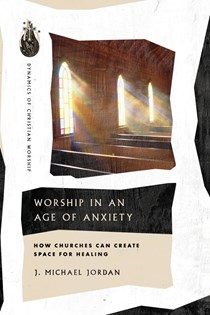
Worship in an Age of Anxiety
How Churches Can Create Space for Healing
Dynamics of Christian Worship
by John Michael Jordan
Too often in the history of Christian worship, evangelical leaders have sought to manipulate anxiety to spur repentance. J. Michael Jordan challenges this utilitarian approach, offering a practical theology of worship within a healing framework that, rather than manipulating anxiety, acknowledges, accepts, and offers it to God.


