

Studies in Theology and the Arts Series
The Studies in Theology and the Arts (STA) series from IVP Academic series seeks to enable Christians to reflect more deeply upon the relationship between their faith and humanity's artistic and cultural expressions. By drawing on the insights of both academic theologians and artistic practitioners, this series encourages thoughtful engagement with and critical discernment of the full variety of artistic media—including visual art, music, literature, film, theater, and more—which both embody and inform Christian thinking.
What you'll find in Studies in Theology and the Arts
- Insights from theologians, artists, and cultural thinkers
- Exploration of various art forms like music, film, and literature
- Theological perspectives and critical reflection on art and culture
Advisory Board:
- Jeremy Begbie, professor of theology and director of Duke Initiatives in Theology and the Arts, Duke Divinity School, Duke University
- Craig Detweiler, dean of the College of Fine Arts and Production, Grand Canyon University
- Makoto Fujimura, artist and author of Art and Faith: A Theology of Making
- Matthew Milliner, associate professor of art history, Wheaton College
- Ben Quash, professor of Christianity and the arts, King's College London
- Linda Stratford, professor of art history and history, Asbury University
- Karen Swallow Prior, writer and author of several books including On Reading Well, Booked, The Evangelical Imagination, and You Have a Calling
- W. David O. Taylor, associate professor of theology and culture, director of Brehm Texas, Fuller Theological Seminary
- Judith Wolfe, lecturer in theology and the arts, Institute for Theology, Imagination and the Arts, The University of St. Andrews
Praise for the Series
"This series is an exciting and critically important development in the burgeoning theology and arts field. It promises to advance the discussion in fresh and highly fruitful ways."
—Jeremy Begbie, professor of theology, Duke Divinity School, director, Duke Initiatives in Theology and the Arts
"Studies in Theology and the Arts provides Christian scholars, artists, and church leaders with an opportunity to shape our theological perspective on the arts in light of the creative realities of our Maker God. These resources can help by extending the salvific narrative into broader creation and new creation narratives, enriching our grasp of the gospel and revealing how wide and long and high and deep is the love of Christ."
—Makoto Fujimura, visual artist and author of Culture Care and Silence and Beauty
"IVP Academic's Studies in Theology and the Arts series features Christian voices reflecting on the arts, not just as relics of the church’s heritage but as significant sites of ongoing cultural and theological exchange. Both scholarly and accessible, these volumes invoke rich theological imaginations to explore a diverse array of art and art practices critically and generously. In so doing, the series testifies to the vibrancy of theology and the arts and invites a new generation of scholars to join the conversation."
—Natalie Carnes, associate professor of theology, Baylor University
Subtotal: $0.00
-
 Paperback
The Wages of Cinema
A Christian Aesthetic of Film in Conversation with Dorothy L. Sayers
Studies in Theology and the Arts Series
by Crystal L. Downing
Discover a New Dimension of Faith and Cinema with The Wages of Cinema
In a captivating realm where cinematic narratives enchant countless viewers, how can one harmonize their faith with the craft of filmmaking? The Wages of Cinema encourages a deep dive into this relationship, drawing upon the significant reflections of Dorothy L. Sayers defending the authenticity ...
-
 Paperback
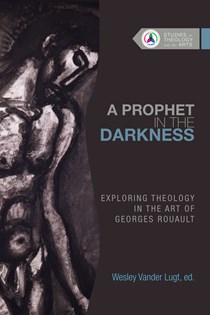
A Prophet in the Darkness
Exploring Theology in the Art of Georges Rouault
Studies in Theology and the Arts Series
Edited by Wesley Vander Lugt
In this collection of essays, a group of theologians, artists, and historians explore Georges Rouault's historical context, personal suffering, and biblical themes, showing how his prophetic creativity continues to inspire artists and thinkers today. Chapters are interspersed with original artistic responses in the form of imagery and poetry.
-
 Paperback
Seeing Is Believing
The Revelation of God Through Film
Studies in Theology and the Arts Series
by Richard Vance Goodwin
In this study in IVP Academic's STA series, theologian Richard Goodwin considers how the images that constitute film might be a conduit of God's revelation. By considering works by Stanley Kubrik, Martin Scorsese, Terrence Malick, and more, Goodwin argues that by inviting emotional responses, film images can be a medium of divine revelation.
-
 Paperback
The Art of New Creation
Trajectories in Theology and the Arts
Studies in Theology and the Arts Series
Edited by Jeremy S Begbie, Daniel Mark Train, and W. David O. Taylor
Creation and the new creation are inextricably bound, for the God who created the world is the same God who promises a new heaven and a new earth. Bringing together theologians, biblical scholars, and artists, this volume based on the DITA10 conference at Duke Divinity School explores how the relation between creation and the new creation is informed by and reflected in the arts.
-
 Paperback
Resisting the Marriage Plot
Faith and Female Agency in Austen, Brontë, Gaskell, and Wollstonecraft
Studies in Theology and the Arts Series
by Dalene Joy Fisher
Fiction has long been used to cast vision for social change, but the role of Christian faith in such works has often been overlooked. In this STA volume, Dalene Joy Fisher examines how the works of Jane Austen, Anne Brontë, Elizabeth Gaskell, andMary Wollstonecraft challenge cultural expectations of women and marriage, exploring how Christianity can be a transformative force of liberation.
-
 Paperback
Placemaking and the Arts
Cultivating the Christian Life
Studies in Theology and the Arts Series
by Jennifer Allen Craft
What role does place play in the Christian life? In this STA volume, Jennifer Allen Craft gives a practical theology of the arts, contending that the arts place us in time, space, and community in ways that encourage us to be fully and imaginatively present in a variety of contexts: the natural world, our homes, our worshiping communities, and society.
-
 Paperback
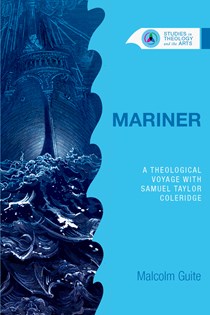
Mariner
A Theological Voyage with Samuel Taylor Coleridge
Studies in Theology and the Arts Series
by Malcolm Guite
Poet and theologian Malcolm Guite leads readers on a journey with Samuel Taylor Coleridge, whose own life paralleled the experience in his famous poem "The Rime of the Ancient Mariner." On this theological voyage, Guite draws out the continuing relevance of this work and the ability of poetry to communicate the truths of humanity's fallenness, our need for grace, and the possibility of redemption.
-
 Paperback
A Subversive Gospel
Flannery O'Connor and the Reimagining of Beauty, Goodness, and Truth
Studies in Theology and the Arts Series
by Michael Mears Bruner
The good news of Jesus Christ is a subversive gospel, and following Jesus is a subversive act. Exploring the theological aesthetic of American author Flannery O'Connor, Michael Bruner argues that her fiction reveals what discipleship to Jesus Christ entails by subverting the traditional understandings of beauty, truth, and goodness.
-
 Paperback
Contemporary Art and the Church
A Conversation Between Two Worlds
Studies in Theology and the Arts Series
Edited by W. David O. Taylor and Taylor Worley
The church and the contemporary art world often find themselves in an uneasy relationship in which misunderstanding and mistrust abound. Drawn from the 2015 biennial CIVA conference, these reflections from theologians, pastors, and practicing artists imagine the possibility of a renewed and mutually fruitful relationship between contemporary art and the church.
-
 Paperback
The Faithful Artist
A Vision for Evangelicalism and the Arts
Studies in Theology and the Arts Series
by Cameron J Anderson
Drawing upon his experiences as both a Christian and an artist, Cameron J. Anderson traces the relationship between the evangelical church and modern art in postwar America. While acknowledging the tensions between faith and visual art, he casts avision for how Christian artists can faithfully pursue their vocational calling in contemporary culture.
-
 Paperback
Modern Art and the Life of a Culture
The Religious Impulses of Modernism
Studies in Theology and the Arts Series
by Jonathan A. Anderson and William A. Dyrness
In 1970, Hans Rookmaaker published Modern Art and the Death of a Culture, a groundbreaking work that considered the role of the Christian artist in society. This volume responds to his work by bringing together a practicing artist and a theologian who argue that modernist art is underwritten by deeply religious concerns.


